
Professional Floor Levelling Services in Hobart
Uneven bathroom floors are more than just an aesthetic problem in Hobart homes—they’re a recipe for cracked tiles, pooling water, and costly repairs down the track. Whether you’re dealing with sagging timber subfloors in a 1970s weatherboard home, settled concrete slabs, or moisture-damaged boards discovered after removing old tiles, proper floor levelling in Hobart is the foundation of any successful bathroom renovation.
At Hobart Bathroom Renovations Experts, we provide professional floor levelling services across Hobart, from West Hobart’s heritage homes to modern builds in Kingston and Glenorchy. Our experienced team assesses your existing subfloor, identifies structural issues, repairs moisture damage, and creates perfectly level surfaces ready for quality tile installation.
Before a single tile goes down, we make sure your foundation is solid, level, and properly prepared. That’s the difference between a bathroom that looks great for 20+ years and one that cracks within months.
When Do You Need Floor Levelling in a Bathroom?
You need bathroom floor levelling in Hobart when your existing subfloor has:
- Visible unevenness – Dips, bumps, or slopes exceeding 3mm over 1 metre
- Bounce or flex – Timber floors that move underfoot (common in older Hobart homes)
- Moisture damage – Soft, spongy, or water-stained floorboards requiring replacement
- Settlement issues – Cracked or sunken concrete slabs
- Poor drainage – Flat surfaces that won’t allow water to flow toward drains
- Old tile removal – Uneven adhesive residue or damaged substrate revealed underneath
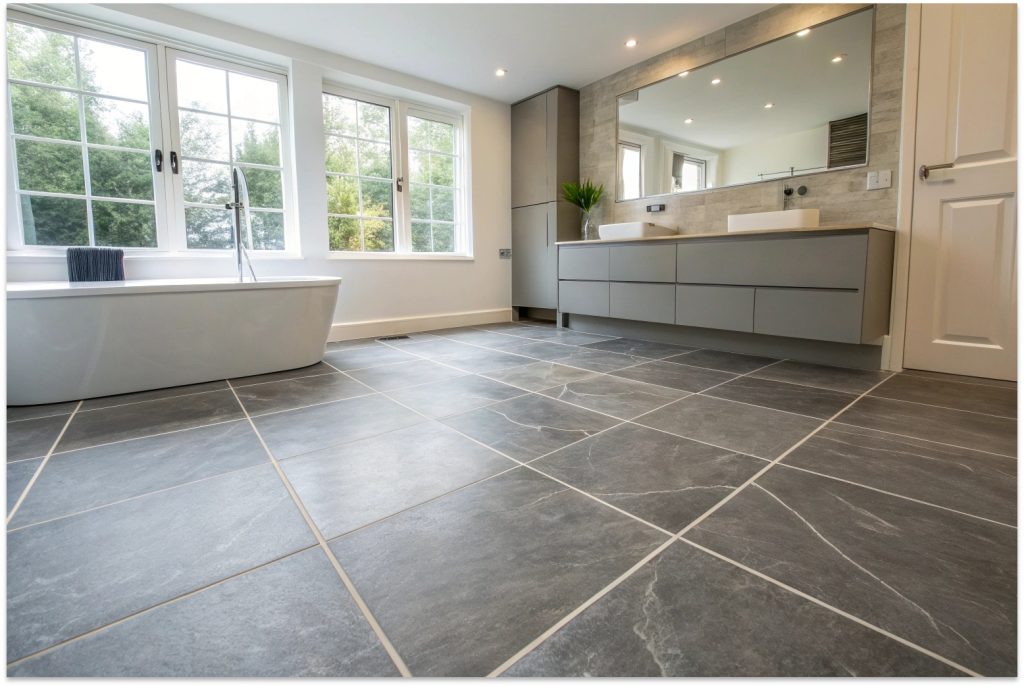
- Large format tiles planned – Tiles over 400mm require near-perfect flatness to prevent lippage
Without proper levelling, you’ll face cracked tiles within months, grout failure, water pooling away from drains, and costly repairs. Professional floor levelling creates a stable, flat foundation that makes sure your Hobart bathroom renovation lasts 20+ years.

CALL US AT (03) 6152 6136 OR
GET A FREE QUOTE TODAY
Signs Your Bathroom Floor Needs Levelling
Visual Indicators of Uneven Floors
Visible dips or humps show up when light hits the floor at certain angles. Lay a straight edge across your floor—any gaps underneath mean unevenness that’ll crack tiles. Sloping in the wrong direction needs fixing before tiling starts.
Structural Warning Signs in Hobart Homes
Bouncy timber floors are common in older Hobart homes. If the floor gives way under your weight, that’s deflection—, and it’ll crack tiles fast. Creaking boards and soft spots usually mean moisture damage or timber rot underneath, needing repair.
Water Drainage Problems
Water pooling away from the drain after showers means your floor doesn’t have proper drainage. Standing water creates perfect conditions for mould growth in Hobart’s humid climate and will ruin your renovation if not fixed.
Post-Demolition Discovery Issues
Pull up old tiles, and you often find water damage, rotted timber, or deteriorated concrete underneath. Previous renovations might have tiled over tiles or used thick adhesive to hide unevenness—all needing removal before proper levelling.
Preparing Your Floor for Quality Tile Installation
Self-Levelling Compound Application
We select the right self-levelling compound based on your substrate type—different products work better on concrete versus timber. Mixing ratios need to be exact for proper flow and strength.
Ensuring Flatness for Large Format Tiles
Large-format tiles over 400mm show every imperfection in the substrate. We test flatness with a 2-metre straight edge, checking for lippage that’ll make tile edges uneven.
Waterproofing Integration and Coordination
Floor levelling happens before waterproofing in the correct installation sequence. We make sure levelling compounds are compatible with the waterproofing membrane you’re using.
Final Surface Preparation and Quality Checks
We test the entire floor with levels to confirm flatness meets tiling standards.

Our Comprehensive Floor Assessment and Repair Process
Initial Subfloor Inspection and Measurement
We use laser levels to map your floor’s exact profile, showing every dip and slope. Moisture testing and structural integrity checks follow, looking for bounce, flex, and soft spots. Everything gets documented with photos and measurements.
Identifying Moisture Damage and Timber Rot
Hobart’s humidity damages bathroom subfloors. We identify water-damaged boards by discolouration, soft spots, and musty smells. Damaged boards get replaced after proper drying, and we identify what caused the moisture problem originally.
Structural Repairs and Reinforcement
Bouncy floors need joist strengthening with noggins and bracing to eliminate movement. We assess if your floor structure can handle tile weight and new fixtures—especially important in heritage Hobart homes with older framing.
Preparing the Surface for Levelling
We remove all old adhesive, dust, and debris for proper bonding. Priming seals porous surfaces. Moisture barriers get installed over timber subfloors to protect against Hobart’s humidity rising through and damaging your new tiles.
Floor Levelling Solutions for Hobart's Older Homes
Timber Subfloor Levelling and Stabilisation
Timber subfloors in older Hobart homes need cement sheet underlayment installed over the top to create a stable tiling surface. This eliminates deflection that causes cracked tiles and provides the rigid base tiles required for long-term performance.
Concrete Slab Levelling and Repair
Self-levelling compounds work perfectly for concrete slabs with minor unevenness. We repair cracks first, then pour the compound to create a smooth, flat surface. Larger settlement issues need screeding to build up low areas properly.
Creating Proper Drainage in Wet Areas
Your bathroom floor needs a 1:100 gradient fall toward the drain—that's 10mm drop per metre. We plan the fall direction carefully during levelling to meet AS 3740 waterproofing standards and make sure water flows exactly where it should.
Managing Floor Height Transitions
Floor levelling raises your bathroom floor height, so we manage transitions to adjoining rooms with threshold strips or step-downs. Matching levels to hallways and bedrooms keeps everything looking professional while maintaining accessibility and preventing trip hazards.
We handle large area coverage regularly – entire bathrooms from wall to wall, combined bathroom-laundry spaces, and even commercial applications where square footage gets substantial. The process scales up, but the quality standards stay the same.
Many Ipswich homeowners choose our combined service packages: floor levelling, waterproofing, and tiling all handled by the same team. This eliminates coordination headaches and ensures each stage is done right before the next one starts.
Floor Levelling Costs and Timeline in Hobart
What Affects Floor Levelling Costs
Bathroom size directly impacts material and labour costs—larger floors need more compound and time. Damage extent matters too—minor levelling is cheaper than full structural repairs with timber replacement.
Typical Floor Levelling Timeline
Assessment takes 1-2 hours to inspect and document all issues. Structural repairs can take 1-3 days, depending on the extent of damage. Self-levelling compound needs a 24-72 hour drying time before any other work happens.
Long-Term Value of Professional Floor Preparation
Proper floor levelling prevents tile failures that cost thousands to repair later. Most tile warranties require correctly prepared substrates. Quality floor preparation adds resale value to your Hobart home and avoids costly repairs down the track.
Get Your Free Floor Assessment in Hobart
Ready to start your bathroom renovation the right way? Our experienced team will inspect your subfloor, identify any issues, and give you a detailed quote with a clear timeline.
Don’t risk cracked tiles and costly repairs by skipping proper floor preparation. Call us today and let’s make sure your bathroom floor is built to last.
Contact Hobart Bathroom Renovations Experts:
📞 Phone: 0361526136
📧 Email: info@hobartbathroomrenos.com
📍 Service Areas: Hobart, West Hobart, Kingston, Glenorchy, Sandy Bay, Lenah Valley, Lindisfarne
Frequently Asked Questions About Floor Levelling in Hobart
We typically complete floor levelling in 2-4 days, depending on your bathroom size and the extent of repairs needed. The assessment takes a few hours, structural repairs take 1-3 days if required, and self-levelling compound needs 24-72 hours to cure before tiling can start. Hobart’s humidity and temperature affect drying times, so we always allow proper curing time rather than rushing the job.
We don’t recommend levelling over existing tiles in most cases. Old tiles hide problems underneath—moisture damage, substrate deterioration, or structural issues that’ll cause your new renovation to fail. We need to remove the old tiles to properly assess and repair the subfloor. Trying to level over tiles just covers up problems that’ll come back to haunt you later.
Floor levelling costs vary based on bathroom size, damage extent, and substrate type. A small bathroom with minor levelling might cost $800-$1,500, while larger bathrooms needing structural repairs can run $2,500-$4,500. We provide detailed quotes after our free assessment so you know exactly what you’re paying for before we start work.
Yes, floor levelling adds 5-15mm to your floor height, depending on how uneven it was originally. We manage this by adjusting door clearances, installing threshold strips at doorways, or creating small step-downs to adjoining rooms. We plan all height transitions during the assessment so there are no surprises.
Absolutely. Timber subfloors need cement sheet underlayment to stop flex and deflection before any levelling compound goes down. Concrete slabs can take self-levelling compound directly after proper cleaning and priming. We assess your substrate type and use the right products and methods for long-lasting results.
We aim for a maximum of 3mm deviation over 1 metre for standard tiles. Large format tiles over 400mm need even tighter tolerances—closer to 2mm over 1 metre. Your floor also needs a proper fall toward the drain at a 1:100 gradient (10mm per metre) to meet AS 3740 waterproofing standards and prevent water pooling.
